The Need for Practical, Accessible CX Guidebooks
In today’s hyper-competitive business landscape, customer experience (CX) has emerged as a defining differentiator for organisations across all sectors. Whether in retail, B2B, digital services, or the public sector, the ability to design, deliver, and continuously improve memorable, seamless, and emotionally resonant customer journeys is now a core driver of loyalty, advocacy, and sustainable growth. Yet, for many professionals and teams, the field of CX can seem daunting—full of jargon, complex frameworks, and rapidly evolving best practices.
What’s needed are guidebooks and handbooks that demystify CX, offering clear, actionable advice in a style reminiscent of the beloved ‘For Dummies’ series: practical, easy to understand, and directly applicable to real-world challenges. This report curates the most useful and accessible English-language CX guidebooks, each accompanied by a concise summary, an explanation of its unique value, and direct links to preview or purchase—prioritising UK sources wherever possible.
The selection covers the full spectrum of CX, including strategy, journey mapping, measurement, employee experience, digital transformation, customer-centric culture, and more. Special attention is given to books that are accessible to both CX newcomers and seasoned practitioners and that provide frameworks, toolkits, and case studies for immediate application.
How This List Was Curated
This report synthesises recommendations from leading CX experts, recent industry roundups, and authoritative booklists published in 2024–2026. It draws on reviews, publisher descriptions, and direct previews to ensure each book is:
- Practical and accessible: Written in plain English, with step-by-step guidance and minimal jargon.
- Comprehensive: Covering key CX domains such as strategy, journey design, measurement, employee experience, digital transformation, and culture.
- Action-oriented: Including frameworks, templates, checklists, or case studies for immediate use.
- Available in the UK: With links to Amazon UK, publisher sites, or other reputable UK-based retailers.
Each book entry below includes a summary of its focus, why it’s useful, and a direct link to preview or purchase.
1. Outside-In: The Secret
Author: Steve Towers
Best for: Leaders, practitioners, and teams ready to shift from inside-out thinking to customer-driven transformation
Why it’s useful:
This book is a blueprint for reimagining business from the customer’s perspective. It introduces the Outside-In philosophy, which challenges organisations to stop optimising internal processes and instead design around customer outcomes. Towers breaks down complex transformation concepts into plain language, using stories, case studies, and practical exercises that make the methodology accessible to both executives and frontline teams.
Readers learn how to identify “Moments of Truth,” eliminate “Failure Demand,” and embed customer-centricity into culture and governance. Each chapter includes actionable frameworks, diagnostic tools, and checklists that help organisations move from theory to practice. The book is especially valuable for those seeking a structured yet flexible approach to customer experience, blending strategic vision with practical execution.
Where to preview or buy:
- UK: Outside-In. the Secret of the 21st Century Leading Companies by Steve Towers (2010-06-26): Amazon.co.uk: Books
- US: Outside-In. the Secret of the 21st Century Leading Companies by Steve Towers (2010-06-26): -BP Group Publishing-: Amazon.com: Books
Further context:
The structure mirrors the clarity of a “For Dummies” guide, with sidebars, tips, and demystified jargon. It’s praised for its balance of theory and practice, offering both a philosophical shift and a toolkit for immediate application. The Outside-In approach has been adopted globally, making this book a cornerstone for anyone serious about customer experience transformation.
2. Customer Experience For Dummies
Authors: Roy Barnes & Bob Kelleher
Best for: CX beginners and teams seeking a friendly, comprehensive introduction
Why it’s useful:
This book is the gold standard for a ‘For Dummies’-style approach to CX. It covers the essentials—mapping customer journeys, measuring engagement, building a customer-centric culture, and responding to feedback—using plain language, humour, and practical examples. The authors break down complex concepts into manageable steps, making it ideal for professionals new to CX or those looking to unify their team’s understanding. Each chapter includes actionable tips, checklists, and real-world scenarios, ensuring readers can move from theory to practice with confidence.
Where to preview or buy:
UK: https://www.amazon.co.uk/Customer-Experience-2-Naeem-Arif/dp/1912774658/httpwwwstevet-20/
US: https://www.amazon.com/Customer-Experience-2-Naeem-Arif-ebook/dp/B08CZTJ1YD/httpwwwstevet-20/
Further context:
The book’s structure mirrors the classic ‘For Dummies’ format, with sidebars, tips, and a focus on demystifying jargon. It is widely praised for its breadth, covering everything from social media engagement to employee advocacy, and for its practical four-week plan to redesign customer touchpoints.
3. The Service Culture Handbook: A Step-by-Step Guide to Getting Your Employees Obsessed with Customer Service
Author: Jeff Toister
Best for: Leaders building a customer-centric culture and empowering employees
Why it’s useful:
Toister’s handbook is a concise, actionable guide to creating a service-obsessed culture. It provides step-by-step instructions, worksheets, and real-world company profiles, making it easy for managers to engage employees and align the organisation around service excellence. The book is praised for its clarity, practical tools, and focus on leadership behaviours that drive lasting change.
Where to preview or buy:
- UK: https://www.amazon.co.uk/Service-Culture-Handbook-Step-Step/dp/B084L1VVXY/httpwwwstevet-20
- US: https://www.amazon.com/Service-Culture-Handbook-Step-Step/dp/0692842004/httpwwwstevet-20
Further context:
The book is structured for quick reading and immediate action, with each chapter ending in practical exercises. It is especially useful for organisations seeking to move beyond slogans and embed customer-centricity in daily behaviours.
4. Mapping Experiences: A Complete Guide to Creating Value Through Journeys, Blueprints, and Diagrams
Author: Jim Kalbach
Best for: Teams and professionals designing, visualizing, and improving customer journeys
Why it’s useful:
Kalbach’s book is the definitive practical guide to journey mapping, service blueprints, and experience diagrams. It explains how to use visual tools to align teams, identify pain points, and drive cross-functional change. The book is accessible to non-designers, with step-by-step instructions, templates, and case studies from companies such as Sonos and LexisNexis.
Where to preview or buy:
- UK: https://www.amazon.co.uk/Mapping-Experiences-Complete-Blueprints-Alignment/dp/1492076635/httpwwwstevet-20
- US: https://www.amazon.com/Mapping-Experiences-Complete-Alignment-Blueprints/dp/1492076635/httpwwwstevet-20
Further context:
The book covers multiple diagram types (journey maps, service blueprints, mental models, spatial maps), rapid techniques for agile teams, and facilitation tips for workshops. It is widely recommended for both CX beginners and advanced practitioners.
5. Customer Experience Wheel: 1-Page Plan to Navigating Your CX Transformation Journey
Author: Toni Krasnic, MBA, CCXP
Best for: CX leaders and teams seeking a concise, actionable framework and toolkit
Why it’s useful:
This book distils CX transformation into a one-page, 12-step roadmap across four phases: Aspire, Aware, Act, and Advance. It is designed for clarity and speed, helping organisations unify around customers, implement data-driven improvements, and drive long-term growth. The book includes templates and checklists and is especially useful for those preparing for the Certified Customer Experience Professional (CCXP) exam.
Further context:
The CX Wheel is praised for its simplicity and practicality, making it a favorite for busy professionals and teams who need a quick-reference, actionable plan.
6. Hug Your Haters: How to Embrace Complaints and Keep Your Customers
Author: Jay Baer
Best for: Customer service teams and managers handling complaints and social care
Why it’s useful:
Baer’s book reframes complaints as opportunities, providing a playbook for responding to both private (offstage) and public (onstage) customer feedback. It includes frameworks (H-O-U-R-S and F-E-A-R-S), real-world case studies, and practical advice for turning critics into advocates. The writing is engaging and direct, making it easy for frontline teams to apply.
Further context:
The book is particularly relevant in the age of social media, where public complaints can quickly escalate. Baer’s frameworks help teams respond quickly, empathetically, and consistently across all channels.
7. The BROOT CX Playbook: A Customer Experience Playbook
Authors: BROOT Consulting
Best for: Teams seeking a toolkit-driven, step-by-step CX transformation guide
Why it’s useful:
Written in a style reminiscent of ‘For Dummies’, this playbook introduces the HEART Framework (Hear, Empathise, Anticipate, Refine, Take Action) and provides templates, scorecards, training plans, and a maturity model. It is aligned with global CX standards (ISO 22458) and covers strategy, journey mapping, segmentation, feedback systems, employee training, governance, and digital tools.
Further context:
The playbook is especially valuable for organisations seeking a structured, toolkit-based approach to CX, with editable resources for immediate application.
8. Customer Experience in Fashion Retailing: Merging Theory and Practice
Editor: Bethan Alexander, PhD
Best for: CX professionals in retail, fashion, and omnichannel environments
Why it’s useful:
This book provides a holistic, integrated perspective on CX in fashion, tracing its evolution from physical stores to omnichannel and digital innovation. It merges academic, agency, and retailer perspectives, with case studies from brands like Zara, Nike, and Ecoalf. The book includes practical guidance on journey mapping, in-store technologies, and responsible retailing.
Further context:
Pedagogical features, reflective questions, and real-life case studies make this book especially useful for retail CX teams and students.
9. Digital Transformation for Customer Success: The New Age Success Mantra
Authors: Suman Deep & Gurleen Kaur
Best for: Leaders and teams driving digital transformation and AI-powered CX
Why it’s useful:
This book explores how businesses can harness digital transformation, CRM, data management, and AI to elevate customer experiences and drive growth. It provides a strategic roadmap for integrating technology with ethical, human-centred practices, featuring case studies and actionable frameworks.
Further context:
The book is especially relevant for organisations navigating the intersection of AI, CRM, and customer success, with a strong emphasis on ethics and responsible innovation.
10. Customer Relationship Management: Concepts, Applications and Technologies (5th Edition, 2024)
Authors: Daniel D. Prior, Francis Buttle, Stan Maklan
Best for: Teams seeking a definitive, practical guide to CRM and data-driven CX
Why it’s useful:
This textbook provides a comprehensive, practical overview of CRM concepts, applications, and technologies, with expanded coverage of customer experience, engagement, and journey management. It includes real-world case studies, exercises, and managerial insights, making it suitable for both academic and professional audiences.
Further context:
The book is updated for 2024, with new content on AI, analytics, and customer journey management, making it a valuable resource for data-driven CX leaders.
11. B2B Customer Experience: A Practical Guide to Delivering Exceptional CX
Authors: Paul Hague & Nick Hague
Best for: B2B CX professionals and teams
Why it’s useful:
This guidebook is tailored for the unique challenges of B2B CX, covering planning, mapping, structuring, implementing, and controlling effective customer experience programs. It includes case studies, tactics for incorporating AI, and strategies for building a customer-centric culture in B2B environments.
Further context:
The book is praised for its practical frameworks, real-world stories, and focus on the emotional drivers of B2B relationships.
12. CX-PRO: A Practical Guide for the New Customer Experience Manager
Author: Karl Sharicz
Best for: New CX managers and professionals seeking a clear, actionable entry point
Why it’s useful:
Sharicz’s guide demystifies CX management, focusing on foundational best practices such as journey mapping and feedback integration. It is approachable, jargon-free, and designed to help new managers build confidence and deliver tangible improvements quickly.
Further context:
The book is especially valuable for those transitioning into CX roles or seeking to build a solid foundation before tackling advanced topics.
13. Delivering Effective Social Customer Service: How to Redefine the Way You Manage Customer Experience and Your Corporate Reputation
Authors: Martin Hill-Wilson & Carolyn Blunt
Best for: Teams managing social media, digital service, and online reputation
Why it’s useful:
This book provides a practical framework for managing customer experience in the age of social media. It blends strategic insights, self-assessment tools, and best practices to enable transparent, instant customer interactions.
Further context:
The book is recommended for digital marketers and service leaders seeking to thrive in the new social landscape.
14. Designing Customer Experiences with Soul: How to Build Products, Services and Brands that People Genuinely Love
Authors: Simon Robinson & Maria Moraes Robinson
Best for: Leaders and teams seeking to align CX with organisational strategy and emotional impact
Why it’s useful:
This book introduces the Customer Centricity Strategy Framework, guiding leaders through journey mapping, measurement, and culture-building to create products and services that customers genuinely love. It includes case studies, worked examples, and leadership development advice.
Further context:
The book is especially valuable for organisations seeking to move beyond transactional CX and build lasting emotional connections with customers.
15. Customer Service Essentials
Author: C. C. Okeke
Best for: Teams seeking a comprehensive, up-to-date course on customer service trends
Why it’s useful:
This book covers the latest in AI-powered support, multi-channel engagement, and personalised experiences. It provides guidance on implementing self-service solutions and prioritising customer success in a rapidly evolving market.
Further context:
The book is designed as a course, making it suitable for team training and onboarding.
16. B2B-Specific: Do B2B Better: Drive Growth Through Game-Changing Customer Experience
Author: Jim Tincher, CCXP
Best for: B2B leaders and teams seeking proven models for customer loyalty and growth
Why it’s useful:
Tincher introduces the CX Loyalty Flywheel, a model for driving customer loyalty and business growth in B2B contexts. The book features case studies from top companies and provides practical strategies for building and sustaining world-class CX programs.
Further context:
The book is praised for its actionable insights and relevance to the unique challenges of B2B CX.
17. Customer Experience 5 (CX5)
Editors: Andrew Priestley & Naeem Arif
Best for: Teams seeking a multi-expert, up-to-date overview of CX best practices
Why it’s useful:
This volume features insights from 18 global CX experts, covering the latest strategies, best practices, and innovations in customer experience. It provides practical guidance on Voice of the Customer (VoC), customer-centric culture, and CX impact.
Further context:
The book is especially valuable for teams seeking a broad, contemporary perspective on CX.
18. Voice of Customer (VoC) Frameworks: Practical Guides
Best for: Teams seeking to implement or improve VoC programs
Why it’s useful:
Several books and articles provide frameworks for VoC, including NPS, CSAT, CES, journey mapping, and sentiment analysis. These resources offer step-by-step guidance for collecting, analysing, and acting on customer feedback.
Further context:
VoC frameworks are essential for organisations seeking to close the feedback loop and drive continuous improvement.
19. Retail and Industry-Specific CX Guides
Best for: Teams in retail, e-commerce, and industry-specific contexts
Why it’s useful:
Industry-specific guides address the unique challenges of retail, fashion, and omnichannel CX, with practical research methods, analytics, and case studies.
Further context:
These resources are invaluable for teams seeking to tailor CX strategies to their industry’s unique dynamics.
20. Quick-Reference Frameworks and Toolkits
Best for: Teams needing one-page frameworks, templates, and toolkits
Why it’s useful:
Several books and playbooks provide quick-reference frameworks, editable templates, and toolkits for journey mapping, feedback collection, and CX measurement.
Further context:
These resources are ideal for teams seeking to accelerate CX transformation with ready-to-use tools.
Summary Table: Top Practical, Accessible CX Guidebooks
| Book Title & Author(s) | Focus Area | Why It’s Useful |
| Outside-In The Secret (Steve Towers) | Origins of Outside-In and the birthing of the CEMMethod. | Easy reading, case studies and practical guidance |
| Customer Experience For Dummies (Barnes & Kelleher) | CX fundamentals, journey mapping, measurement, culture | Friendly, comprehensive, step-by-step; ideal for beginners |
| The Service Culture Handbook (Toister) | Service culture, employee engagement | Step-by-step, actionable, with worksheets and company profiles |
| Mapping Experiences (Kalbach) | Journey mapping, service blueprints, visualization | Practical, visual, with templates and case studies |
| Customer Experience Wheel (Krasnic) | CX transformation, frameworks, toolkits | One-page plan, 12-step roadmap, templates for quick action |
| Hug Your Haters (Baer) | Complaint handling, social care | Playbooks for public/private complaints, case studies |
| BROOT CX Playbook | CX strategy, journey mapping, toolkits | HEART framework, templates, maturity model |
| Customer Experience in Fashion Retailing (Alexander) | Retail/fashion CX, omnichannel | Academic, agency, and retailer perspectives, case studies |
| Digital Transformation for Customer Success (Deep & Kaur) | Digital CX, AI, CRM | Strategic, ethical, with case studies and frameworks |
| Customer Relationship Management (Prior, Buttle, Maklan) | CRM, data-driven CX | Comprehensive, updated for 2024, with exercises and cases |
| B2B Customer Experience (Hague & Hague) | B2B CX, strategy, AI | Practical, case studies, emotional drivers in B2B |
| CX-PRO (Sharicz) | CX management basics | Actionable, jargon-free, for new managers |
| Delivering Effective Social Customer Service (Hill-Wilson & Blunt) | Social CX, digital service | Strategic, with self-assessment tools and best practices |
| Designing Customer Experiences with Soul (Robinson & Robinson) | CX strategy, emotional impact | Customer Centricity Strategy Framework, case studies |
| Customer Service Essentials (Okeke) | Customer service, AI, multi-channel | Up-to-date, course-style, for team training |
| Do B2B Better (Tincher) | B2B CX, loyalty, growth | CX Loyalty Flywheel, case studies, actionable strategies |
| Customer Experience 5 (Priestley & Arif) | Multi-expert CX overview | Latest strategies, best practices, innovations |
How to Choose the Right Guidebook for Your Needs
- For a friendly, all-in-one introduction: Start with Customer Experience For Dummies.
- For strategic transformation and leadership: Outside In The Secret, The Service Culture Handbook, or Designing Customer Experiences with Soul.
- For journey mapping and service design: Mapping Experiences or Customer Experience Wheel.
- For complaint handling and social care: Hug Your Haters or Delivering Effective Social Customer Service.
- For digital transformation and AI: Digital Transformation for Customer Success or Customer Relationship Management.
- For B2B or industry-specific needs: B2B Customer Experience, Do B2B Better, or Customer Experience in Fashion Retailing.
- For quick-reference frameworks and toolkits: BROOT CX Playbook or Customer Experience Wheel.
Conclusion: Building CX Capability with Practical, Accessible Resources
The field of customer experience is vast and evolving, but practical, accessible guidebooks can empower any professional or team to make meaningful improvements. The books curated in this report are united by their clarity, actionability, and focus on real-world results. Whether you’re launching a new CX initiative, refining your journey mapping process, or building a customer-centric culture, these resources will help you move from theory to practice—and from good intentions to measurable impact.
For the most up-to-date links and availability, always check Amazon, publisher sites, or reputable book retailers. Many of these books are also available as Kindle editions, audiobooks, or through local libraries and digital platforms.
Note: This curated list is based on the latest expert recommendations, industry roundups, and direct book previews as of January 2026. For further reading, consider subscribing to CX newsletters, joining professional communities, or exploring additional resources from the authors and publishers featured here.
Introduction: The Need for Practical, Accessible CX Guidebooks
In today’s hyper-competitive business landscape, customer experience (CX) has emerged as a defining differentiator for organisations across all sectors. Whether in retail, B2B, digital services, or the public sector, the ability to design, deliver, and continuously improve memorable, seamless, and emotionally resonant customer journeys is now a core driver of loyalty, advocacy, and sustainable growth. Yet, for many professionals and teams, the field of CX can seem daunting—full of jargon, complex frameworks, and rapidly evolving best practices.
What’s needed are guidebooks and handbooks that demystify CX, offering clear, actionable advice in a style reminiscent of the beloved ‘For Dummies’ series: practical, easy to understand, and directly applicable to real-world challenges. This report curates the most useful and accessible English-language CX guidebooks, each accompanied by a concise summary, an explanation of its unique value, and direct links to preview or purchase—prioritizing UK sources wherever possible.
The selection covers the full spectrum of CX, including strategy, journey mapping, measurement, employee experience, digital transformation, customer-centric culture, and more. Special attention is given to books that are accessible to both CX newcomers and seasoned practitioners and that provide frameworks, toolkits, and case studies for immediate application.
How This List Was Curated
This report synthesises recommendations from leading CX experts, recent industry roundups, and authoritative booklists published in 2024–2026. It draws on reviews, publisher descriptions, and direct previews to ensure each book is:
- Practical and accessible: Written in plain English, with step-by-step guidance and minimal jargon.
- Comprehensive: Covering key CX domains such as strategy, journey design, measurement, employee experience, digital transformation, and culture.
- Action-oriented: Including frameworks, templates, checklists, or case studies for immediate use.
- Available in the UK: With links to Amazon UK, publisher sites, or other reputable UK-based retailers.
Each book entry below includes a summary of its focus, why it’s useful, and a direct link to preview or purchase.
1. Outside-In: The Secret
Author: Steve Towers
Best for: Leaders, practitioners, and teams ready to shift from inside-out thinking to customer-driven transformation
Why it’s useful:
This book is a blueprint for reimagining business from the customer’s perspective. It introduces the Outside-In philosophy, which challenges organisations to stop optimising internal processes and instead design around customer outcomes. Towers breaks down complex transformation concepts into plain language, using stories, case studies, and practical exercises that make the methodology accessible to both executives and frontline teams.
Readers learn how to identify “Moments of Truth,” eliminate “Failure Demand,” and embed customer-centricity into culture and governance. Each chapter includes actionable frameworks, diagnostic tools, and checklists that help organisations move from theory to practice. The book is especially valuable for those seeking a structured yet flexible approach to customer experience, blending strategic vision with practical execution.
Where to preview or buy:
- UK: Outside-In. the Secret of the 21st Century Leading Companies by Steve Towers (2010-06-26): Amazon.co.uk: Books
- US: Outside-In. the Secret of the 21st Century Leading Companies by Steve Towers (2010-06-26): -BP Group Publishing-: Amazon.com: Books
Further context:
The structure mirrors the clarity of a “For Dummies” guide, with sidebars, tips, and demystified jargon. It’s praised for its balance of theory and practice, offering both a philosophical shift and a toolkit for immediate application. The Outside-In approach has been adopted globally, making this book a cornerstone for anyone serious about customer experience transformation.
2. Customer Experience For Dummies
Authors: Roy Barnes & Bob Kelleher
Best for: CX beginners and teams seeking a friendly, comprehensive introduction
Why it’s useful:
This book is the gold standard for a ‘For Dummies’-style approach to CX. It covers the essentials—mapping customer journeys, measuring engagement, building a customer-centric culture, and responding to feedback—using plain language, humour, and practical examples. The authors break down complex concepts into manageable steps, making it ideal for professionals new to CX or those looking to unify their team’s understanding. Each chapter includes actionable tips, checklists, and real-world scenarios, ensuring readers can move from theory to practice with confidence.
Where to preview or buy:
UK: https://www.amazon.co.uk/Customer-Experience-2-Naeem-Arif/dp/1912774658/httpwwwstevet-20/
US: https://www.amazon.com/Customer-Experience-2-Naeem-Arif-ebook/dp/B08CZTJ1YD/httpwwwstevet-20/
Further context:
The book’s structure mirrors the classic ‘For Dummies’ format, with sidebars, tips, and a focus on demystifying jargon. It is widely praised for its breadth, covering everything from social media engagement to employee advocacy, and for its practical four-week plan to redesign customer touchpoints.
3. The Service Culture Handbook: A Step-by-Step Guide to Getting Your Employees Obsessed with Customer Service
Author: Jeff Toister
Best for: Leaders building a customer-centric culture and empowering employees
Why it’s useful:
Toister’s handbook is a concise, actionable guide to creating a service-obsessed culture. It provides step-by-step instructions, worksheets, and real-world company profiles, making it easy for managers to engage employees and align the organisation around service excellence. The book is praised for its clarity, practical tools, and focus on leadership behaviours that drive lasting change.
Where to preview or buy:
- UK: https://www.amazon.co.uk/Service-Culture-Handbook-Step-Step/dp/B084L1VVXY/httpwwwstevet-20
- US: https://www.amazon.com/Service-Culture-Handbook-Step-Step/dp/0692842004/httpwwwstevet-20
Further context:
The book is structured for quick reading and immediate action, with each chapter ending in practical exercises. It is especially useful for organizations seeking to move beyond slogans and embed customer-centricity in daily behaviors.
4. Mapping Experiences: A Complete Guide to Creating Value Through Journeys, Blueprints, and Diagrams
Author: Jim Kalbach
Best for: Teams and professionals designing, visualizing, and improving customer journeys
Why it’s useful:
Kalbach’s book is the definitive practical guide to journey mapping, service blueprints, and experience diagrams. It explains how to use visual tools to align teams, identify pain points, and drive cross-functional change. The book is accessible to non-designers, with step-by-step instructions, templates, and case studies from companies such as Sonos and LexisNexis.
Where to preview or buy:
- UK: https://www.amazon.co.uk/Mapping-Experiences-Complete-Blueprints-Alignment/dp/1492076635/httpwwwstevet-20
- US: https://www.amazon.com/Mapping-Experiences-Complete-Alignment-Blueprints/dp/1492076635/httpwwwstevet-20
Further context:
The book covers multiple diagram types (journey maps, service blueprints, mental models, spatial maps), rapid techniques for agile teams, and facilitation tips for workshops. It is widely recommended for both CX beginners and advanced practitioners.
5. Customer Experience Wheel: 1-Page Plan to Navigating Your CX Transformation Journey
Author: Toni Krasnic, MBA, CCXP
Best for: CX leaders and teams seeking a concise, actionable framework and toolkit
Why it’s useful:
This book distils CX transformation into a one-page, 12-step roadmap across four phases: Aspire, Aware, Act, and Advance. It is designed for clarity and speed, helping organisations unify around customers, implement data-driven improvements, and drive long-term growth. The book includes templates and checklists and is especially useful for those preparing for the Certified Customer Experience Professional (CCXP) exam.
Further context:
The CX Wheel is praised for its simplicity and practicality, making it a favorite for busy professionals and teams who need a quick-reference, actionable plan.
6. Hug Your Haters: How to Embrace Complaints and Keep Your Customers
Author: Jay Baer
Best for: Customer service teams and managers handling complaints and social care
Why it’s useful:
Baer’s book reframes complaints as opportunities, providing a playbook for responding to both private (offstage) and public (onstage) customer feedback. It includes frameworks (H-O-U-R-S and F-E-A-R-S), real-world case studies, and practical advice for turning critics into advocates. The writing is engaging and direct, making it easy for frontline teams to apply.
Further context:
The book is particularly relevant in the age of social media, where public complaints can quickly escalate. Baer’s frameworks help teams respond quickly, empathetically, and consistently across all channels.
7. The BROOT CX Playbook: A Customer Experience Playbook
Authors: BROOT Consulting
Best for: Teams seeking a toolkit-driven, step-by-step CX transformation guide
Why it’s useful:
Written in a style reminiscent of ‘For Dummies’, this playbook introduces the HEART Framework (Hear, Empathize, Anticipate, Refine, Take Action) and provides templates, scorecards, training plans, and a maturity model. It is aligned with global CX standards (ISO 22458) and covers strategy, journey mapping, segmentation, feedback systems, employee training, governance, and digital tools.
Further context:
The playbook is especially valuable for organizations seeking a structured, toolkit-based approach to CX, with editable resources for immediate application.
8. Customer Experience in Fashion Retailing: Merging Theory and Practice
Editor: Bethan Alexander, PhD
Best for: CX professionals in retail, fashion, and omnichannel environments
Why it’s useful:
This book provides a holistic, integrated perspective on CX in fashion, tracing its evolution from physical stores to omnichannel and digital innovation. It merges academic, agency, and retailer perspectives, with case studies from brands like Zara, Nike, and Ecoalf. The book includes practical guidance on journey mapping, in-store technologies, and responsible retailing.
Further context:
Pedagogical features, reflective questions, and real-life case studies make this book especially useful for retail CX teams and students.
9. Digital Transformation for Customer Success: The New Age Success Mantra
Authors: Suman Deep & Gurleen Kaur
Best for: Leaders and teams driving digital transformation and AI-powered CX
Why it’s useful:
This book explores how businesses can harness digital transformation, CRM, data management, and AI to elevate customer experiences and drive growth. It provides a strategic roadmap for integrating technology with ethical, human-centered practices, featuring case studies and actionable frameworks.
Further context:
The book is especially relevant for organizations navigating the intersection of AI, CRM, and customer success, with a strong emphasis on ethics and responsible innovation.
10. Customer Relationship Management: Concepts, Applications and Technologies (5th Edition, 2024)
Authors: Daniel D. Prior, Francis Buttle, Stan Maklan
Best for: Teams seeking a definitive, practical guide to CRM and data-driven CX
Why it’s useful:
This textbook provides a comprehensive, practical overview of CRM concepts, applications, and technologies, with expanded coverage of customer experience, engagement, and journey management. It includes real-world case studies, exercises, and managerial insights, making it suitable for both academic and professional audiences.
Further context:
The book is updated for 2024, with new content on AI, analytics, and customer journey management, making it a valuable resource for data-driven CX leaders.
11. B2B Customer Experience: A Practical Guide to Delivering Exceptional CX
Authors: Paul Hague & Nick Hague
Best for: B2B CX professionals and teams
Why it’s useful:
This guidebook is tailored for the unique challenges of B2B CX, covering planning, mapping, structuring, implementing, and controlling effective customer experience programs. It includes case studies, tactics for incorporating AI, and strategies for building a customer-centric culture in B2B environments.
Further context:
The book is praised for its practical frameworks, real-world stories, and focus on the emotional drivers of B2B relationships.
12. CX-PRO: A Practical Guide for the New Customer Experience Manager
Author: Karl Sharicz
Best for: New CX managers and professionals seeking a clear, actionable entry point
Why it’s useful:
Sharicz’s guide demystifies CX management, focusing on foundational best practices such as journey mapping and feedback integration. It is approachable, jargon-free, and designed to help new managers build confidence and deliver tangible improvements quickly.
Further context:
The book is especially valuable for those transitioning into CX roles or seeking to build a solid foundation before tackling advanced topics.
13. Delivering Effective Social Customer Service: How to Redefine the Way You Manage Customer Experience and Your Corporate Reputation
Authors: Martin Hill-Wilson & Carolyn Blunt
Best for: Teams managing social media, digital service, and online reputation
Why it’s useful:
This book provides a practical framework for managing customer experience in the age of social media. It blends strategic insight, self-assessment tools, and best practices for transparent, instant customer interactions.
Further context:
The book is recommended for digital marketers and service leaders seeking to thrive in the new social landscape.
14. Designing Customer Experiences with Soul: How to Build Products, Services and Brands that People Genuinely Love
Authors: Simon Robinson & Maria Moraes Robinson
Best for: Leaders and teams seeking to align CX with organizational strategy and emotional impact
Why it’s useful:
This book introduces the Customer Centricity Strategy Framework, guiding leaders through journey mapping, measurement, and culture-building to create products and services that customers genuinely love. It includes case studies, worked examples, and leadership development advice.
Further context:
The book is especially valuable for organizations seeking to move beyond transactional CX and build lasting emotional connections with customers.
15. Customer Service Essentials
Author: C. C. Okeke
Best for: Teams seeking a comprehensive, up-to-date course on customer service trends
Why it’s useful:
This book covers the latest in AI-powered support, multi-channel engagement, and personalized experiences. It provides guidance on implementing self-service solutions and prioritizing customer success in a rapidly evolving market.
Further context:
The book is designed as a course, making it suitable for team training and onboarding.
16. B2B-Specific: Do B2B Better: Drive Growth Through Game-Changing Customer Experience
Author: Jim Tincher, CCXP
Best for: B2B leaders and teams seeking proven models for customer loyalty and growth
Why it’s useful:
Tincher introduces the CX Loyalty Flywheel, a model for driving customer loyalty and business growth in B2B contexts. The book features case studies from top companies and provides practical strategies for building and sustaining world-class CX programs.
Further context:
The book is praised for its actionable insights and relevance to the unique challenges of B2B CX.
17. Customer Experience 5 (CX5)
Editors: Andrew Priestley & Naeem Arif
Best for: Teams seeking a multi-expert, up-to-date overview of CX best practices
Why it’s useful:
This volume features insights from 18 global CX experts, covering the latest strategies, best practices, and innovations in customer experience. It provides practical guidance on Voice of the Customer (VoC), customer-centric culture, and CX impact.
Further context:
The book is especially valuable for teams seeking a broad, contemporary perspective on CX.
18. Voice of Customer (VoC) Frameworks: Practical Guides
Best for: Teams seeking to implement or improve VoC programs
Why it’s useful:
Several books and articles provide frameworks for VoC, including NPS, CSAT, CES, journey mapping, and sentiment analysis. These resources offer step-by-step guidance for collecting, analyzing, and acting on customer feedback.
Further context:
VoC frameworks are essential for organizations seeking to close the feedback loop and drive continuous improvement.
19. Retail and Industry-Specific CX Guides
Best for: Teams in retail, e-commerce, and industry-specific contexts
Why it’s useful:
Industry-specific guides address the unique challenges of retail, fashion, and omnichannel CX, with practical research methods, analytics, and case studies.
Further context:
These resources are invaluable for teams seeking to tailor CX strategies to their industry’s unique dynamics.
20. Quick-Reference Frameworks and Toolkits
Best for: Teams needing one-page frameworks, templates, and toolkits
Why it’s useful:
Several books and playbooks provide quick-reference frameworks, editable templates, and toolkits for journey mapping, feedback collection, and CX measurement.
Further context:
These resources are ideal for teams seeking to accelerate CX transformation with ready-to-use tools.
Summary Table: Top Practical, Accessible CX Guidebooks
| Book Title & Author(s) | Focus Area | Why It’s Useful |
| Outside-In The Secret (Steve Towers) | Origins of Outside-In and the birthing of the CEMMethod. | Easy reading, case studies and practical guidance |
| Customer Experience For Dummies (Barnes & Kelleher) | CX fundamentals, journey mapping, measurement, culture | Friendly, comprehensive, step-by-step; ideal for beginners |
| The Service Culture Handbook (Toister) | Service culture, employee engagement | Step-by-step, actionable, with worksheets and company profiles |
| Mapping Experiences (Kalbach) | Journey mapping, service blueprints, visualization | Practical, visual, with templates and case studies |
| Customer Experience Wheel (Krasnic) | CX transformation, frameworks, toolkits | One-page plan, 12-step roadmap, templates for quick action |
| Hug Your Haters (Baer) | Complaint handling, social care | Playbooks for public/private complaints, case studies |
| BROOT CX Playbook | CX strategy, journey mapping, toolkits | HEART framework, templates, maturity model |
| Customer Experience in Fashion Retailing (Alexander) | Retail/fashion CX, omnichannel | Academic, agency, and retailer perspectives, case studies |
| Digital Transformation for Customer Success (Deep & Kaur) | Digital CX, AI, CRM | Strategic, ethical, with case studies and frameworks |
| Customer Relationship Management (Prior, Buttle, Maklan) | CRM, data-driven CX | Comprehensive, updated for 2024, with exercises and cases |
| B2B Customer Experience (Hague & Hague) | B2B CX, strategy, AI | Practical, case studies, emotional drivers in B2B |
| CX-PRO (Sharicz) | CX management basics | Actionable, jargon-free, for new managers |
| Delivering Effective Social Customer Service (Hill-Wilson & Blunt) | Social CX, digital service | Strategic, with self-assessment tools and best practices |
| Designing Customer Experiences with Soul (Robinson & Robinson) | CX strategy, emotional impact | Customer Centricity Strategy Framework, case studies |
| Customer Service Essentials (Okeke) | Customer service, AI, multi-channel | Up-to-date, course-style, for team training |
| Do B2B Better (Tincher) | B2B CX, loyalty, growth | CX Loyalty Flywheel, case studies, actionable strategies |
| Customer Experience 5 (Priestley & Arif) | Multi-expert CX overview | Latest strategies, best practices, innovations |
How to Choose the Right Guidebook for Your Needs
- For a friendly, all-in-one introduction: Start with Customer Experience For Dummies.
- For strategic transformation and leadership: Outside In The Secret, The Service Culture Handbook, or Designing Customer Experiences with Soul.
- For journey mapping and service design: Mapping Experiences or Customer Experience Wheel.
- For complaint handling and social care: Hug Your Haters or Delivering Effective Social Customer Service.
- For digital transformation and AI: Digital Transformation for Customer Success or Customer Relationship Management.
- For B2B or industry-specific needs: B2B Customer Experience, Do B2B Better, or Customer Experience in Fashion Retailing.
- For quick-reference frameworks and toolkits: BROOT CX Playbook or Customer Experience Wheel.
Conclusion: Building CX Capability with Practical, Accessible Resources
The field of customer experience is vast and evolving, but practical, accessible guidebooks can empower any professional or team to make meaningful improvements. The books curated in this report are united by their clarity, actionability, and focus on real-world results. Whether you’re launching a new CX initiative, refining your journey mapping process, or building a customer-centric culture, these resources will help you move from theory to practice—and from good intentions to measurable impact.
For the most up-to-date links and availability, always check Amazon, publisher sites, or reputable book retailers. Many of these books are also available as Kindle editions, audiobooks, or through local libraries and digital platforms.
Note: This curated list is based on the latest expert recommendations, industry roundups, and direct book previews as of January 2026. For further reading, consider subscribing to CX newsletters, joining professional communities, or exploring additional resources from the authors and publishers featured here.
Businesses must actively engineer and continuously innovate this experience to drive success. Further, we define success as winning the triple crown: simultaneously growing revenues, Reducing Costs, and Improving Service.

Steve has also published many articles and conference keynotes (see the MOT primer below) reviewing the continued evolution of this fascinating concept.
Join us at a coaching session and become qualified in Customer Centric and Process Transformation https://www.bpgroup.org or visit https://www.stevetowers.com
Definitions
What is a Moment of Truth?
A Moment of Truth is any interaction with the customer within the Customer Experience, first discussed in my 1993 book ‘Business Process Reengineering – A Senior Executive’s Guide‘
Moments of Truth are the cause of all work.
This understanding underpins the CEMMethod, first launched in 2006 and now in version 15. It is the idea that all work an organisation undertakes is, at a fundamental level, caused by Moments of Truth. In principle, everything a company does can and should be linked to a Moment of Truth.
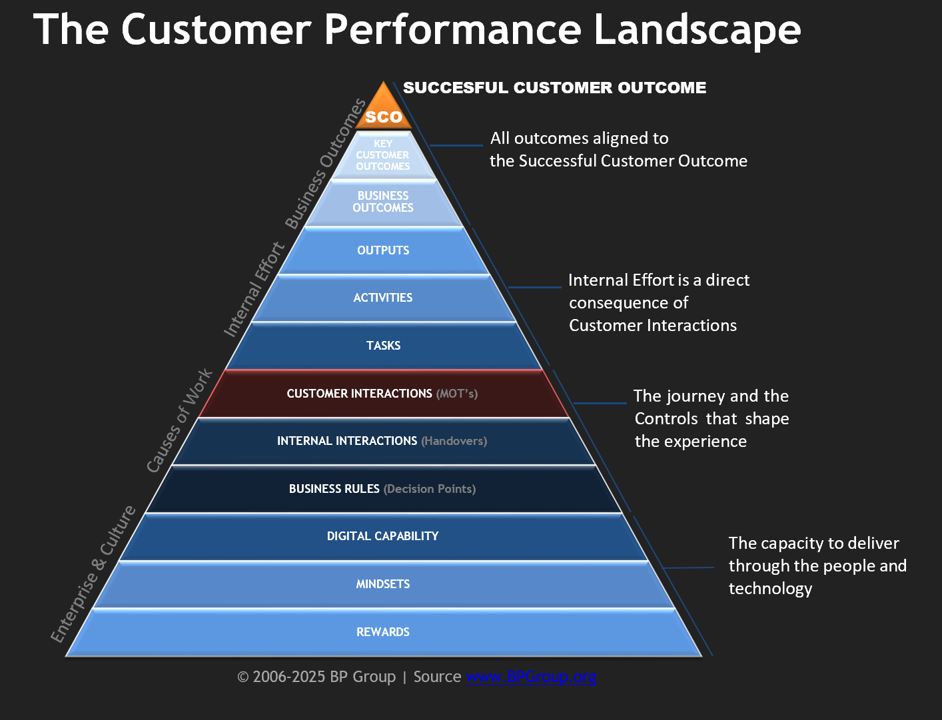
Managing Moments of Truth
Enlightened ‘Outside-In’ organisations actively embrace Moment of Truth Management as an essential strategic and operational necessity to deliver engineered Customer Experiences. How so?
a. Designing for Moments of Truth – The Design-Implementation Gap
Early efforts were geared towards designing optimal Moments of Truth; however, simply mapping customer journeys has never been enough. It is one thing to agree on what a future state customer journey should be; it is entirely another to implement it. This Design-Implementation gap is precisely what kills the majority of Customer Experience initiatives.
b. Implementing optimised Moments of Truth
Successful deployment of innovated Moments of Truth is key to delivering optimal Customer Experiences. The most practical immediate results focus on a rapid rollout across a key experience, using the success of that rollout to validate the smooth rollout across the organisation. Establishing ownership, accountability, metrics, controls and improvement paths are part of this discipline.
c. Operationalising Moments of Truth
Once Moments of Truth have been designed, innovated and implemented into recrafted customer experiences, they need to be actively managed ‘in the moment’ and shared. Every Moment of Truth should feed to a corporate dashboard, with real-time data showing the performance of that MOT and its associated experiences. If things go wrong, the owner should be able to ‘course correct’ and real-time monitor the customer experience delivery.
Imagine a world without customer satisfaction surveys, no need for Net Promoter Scores, no focus groups, and no mystery shopping because you will know how 100% of interactions are performing 100% of the time.
Control and Action combined
The C-suite and leaders will now have a clear line of sight into every corner of the organisation and across the enterprise landscape, in real-time. One version of the data truth (and not all those departmental/divisional versions of reality).
The need for retrospective action evaporates. Immediate and laser-focused control can be maintained, delivering simultaneously enhanced service, lower costs, higher revenues, improved compliance and uber motivated employees.
MOT primer…
Steve Towers
https://www.linkedin.com/in/stevetowers/
Richard Normann – creator of the Moments of Truth concept:
https://en.wikipedia.org/wiki/Richard_Normann
Jan Carlzon – author of ‘Moments of Truth’
https://en.wikipedia.org/wiki/Jan_Carlzon
Moments of Truth 2025 (VIDEO)
https://youtu.be/3mzz_LdgmFY
That Kodak Moment of Truth
https://www.processexcellencenetwork.com/innovation/columns/4-lessons-from-the-kodak-moment-of-truth
Mitch Belsley – Get Scientific about Managing Moments of Truth
http://customerthink.com/get-scientific-about-managing-moments-of-truth/
Accreditation & Certification in CX and Process
https://www.bpgroup.org